
Common Mistakes Companies Make in Plastic EPR Filing
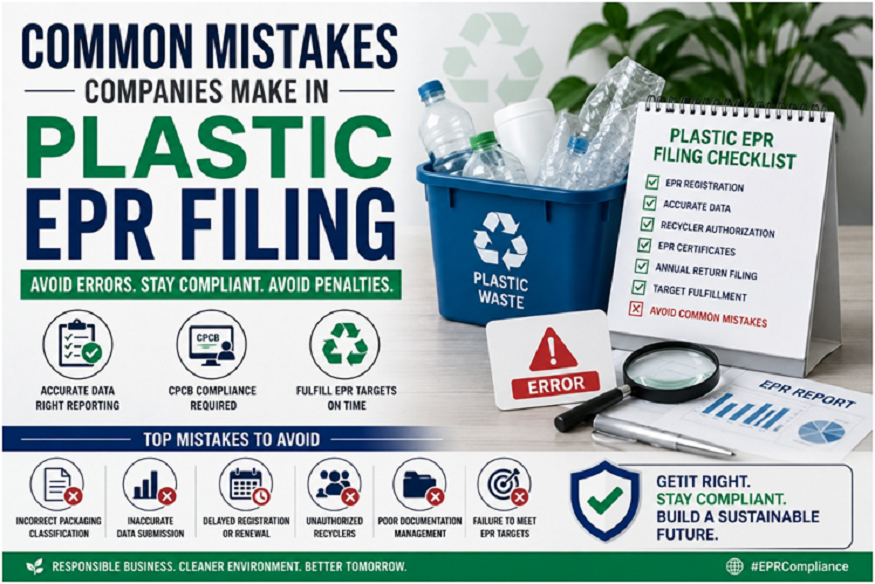
Extended Producer Responsibility (EPR) compliance has become a major regulatory requirement for producers, importers, and brand owners (PIBOs) operating in India. Under the Plastic Waste Management Rules, businesses dealing with plastic packaging must register on the Central Pollution Control Board (CPCB) EPR portal and fulfill annual recycling and waste management obligations.
However, many companies struggle with EPR filing because of changing regulations, complex documentation requirements, and lack of proper waste tracking systems. Even small filing mistakes can result in compliance notices, penalties, rejected submissions, or delays in EPR certificate generation.
This article explains the most common mistakes companies make in Plastic EPR filing and how businesses can avoid compliance risks.
Understanding Plastic EPR Filing
Plastic EPR filing involves submitting accurate information related to:
- Plastic packaging introduced into the market
- Category-wise plastic usage
- Recycling targets
- EPR certificates
- Annual returns
- Recycler agreements
- Waste recovery documentation
The filing process is managed through the CPCB EPR portal and applies to:
- Producers
- Importers
- Brand Owners (PIBOs)
- Plastic waste processors
- Recyclers
Businesses are required to meet annual EPR targets based on the quantity and category of plastic packaging they introduce into the market.
1. Incorrect Plastic Packaging Classification
One of the most common EPR filing mistakes is incorrect classification of plastic packaging categories.
Under Plastic Waste Management Rules, plastic packaging is categorized into:
- Category I – Rigid plastic packaging
- Category II – Flexible plastic packaging
- Category III – Multi-layered plastic packaging
- Category IV – Compostable plastic sheets and carry bags
Many businesses incorrectly classify packaging materials, especially flexible and multilayer plastics.
This creates problems such as:
- Incorrect EPR target calculation
- Filing discrepancies
- Compliance notices from CPCB
- Rejected submissions
How to Avoid It
- Conduct proper packaging audits
- Verify material composition
- Consult technical experts when classifying packaging
- Maintain SKU-level packaging data
2. Inaccurate Data Submission
Many companies submit estimated or inconsistent packaging data instead of actual verified figures.
Common data-related issues include:
- Wrong packaging weight calculations
- Duplicate reporting
- Missing product categories
- Incorrect sales quantity assumptions
- Unit conversion errors
Inaccurate data directly affects EPR liability calculations and may trigger regulatory scrutiny.
How to Avoid It
- Maintain centralized packaging records
- Use ERP-based tracking systems
- Coordinate between procurement, packaging, and compliance teams
- Conduct internal verification before filing
3. Delayed EPR Registration or Renewal
Some businesses start EPR compliance only after receiving notices from authorities.
Late registration or delayed renewal may lead to:
- Business compliance risks
- Delayed product movement
- Marketplace restrictions
- Regulatory penalties
Many companies also forget renewal timelines or fail to update business details on the portal.
How to Avoid It
- Track registration validity dates
- Maintain compliance calendars
- Begin renewal process well before expiry
- Regularly monitor CPCB notifications
4. Choosing Unauthorized Recyclers or Processors
Companies sometimes purchase EPR certificates from unauthorized or non-compliant recyclers.
This is a serious risk because certificates from invalid processors may not be accepted during compliance verification.
Consequences may include:
- Invalid EPR fulfillment
- Rejection during audits
- Additional liability
- Financial losses
How to Avoid It
- Verify recycler authorization status
- Check CPCB registration validity
- Maintain recycler agreements and transaction records
- Conduct due diligence before certificate purchases
5. Poor Documentation Management
Plastic EPR compliance requires extensive documentation.
Missing or incomplete documents often create filing complications during inspections or audits.
Common missing records include:
- Purchase invoices
- Packaging specifications
- Recycler agreements
- Waste processing certificates
- Transportation records
- Annual return acknowledgments
How to Avoid It
Maintain organized digital records of all:
- Packaging data
- EPR certificates
- Recycler invoices
- Contracts
- Compliance filings
Businesses should ideally retain records for multiple years for audit purposes.
6. Failure to Meet Annual EPR Targets
Some companies underestimate their EPR obligations and fail to procure sufficient recycling certificates before annual deadlines.
This usually happens because of:
- Poor forecasting
- Incorrect packaging data
- Delayed procurement of certificates
- Lack of compliance monitoring
Failure to fulfill EPR targets may result in environmental compensation charges and regulatory action.
How to Avoid It
- Monitor obligations quarterly
- Track target fulfillment continuously
- Work with reliable recyclers
- Avoid last-minute certificate purchases
7. Ignoring State-Level Compliance Requirements
While EPR registration is managed centrally through CPCB, some businesses overlook additional state pollution control requirements.
This is common among:
- Manufacturers
- Warehousing companies
- Packaging units
- Regional distributors
Ignoring local compliance obligations can create legal complications.
How to Avoid It
- Check SPCB/PCC requirements regularly
- Coordinate central and state-level compliance
- Maintain location-wise documentation
8. Lack of Coordination Between Departments
EPR compliance often involves multiple departments, including:
- Procurement
- Packaging
- Supply chain
- Finance
- Legal
- Sustainability
- Compliance teams
Many filing errors occur because departments operate independently without centralized reporting.
How to Avoid It
- Create internal compliance workflows
- Assign EPR responsibility clearly
- Conduct periodic cross-functional reviews
- Use centralized reporting systems
9. Last-Minute Filing
Many companies delay EPR filing until the deadline approaches.
This creates risks such as:
- Portal submission issues
- Data mismatches
- Missing documents
- Incomplete verification
- Incorrect certificate procurement
Last-minute filing also increases the possibility of human errors.
How to Avoid It
- Prepare compliance data throughout the year
- Maintain monthly packaging records
- Conduct quarterly compliance reviews
- Avoid deadline-based filing practices
10. Misunderstanding EPR Applicability
Some businesses incorrectly assume that EPR applies only to plastic manufacturers.
In reality, EPR obligations may apply to:
- Importers
- E-commerce brands
- FMCG companies
- Cosmetic brands
- Food packaging companies
- Online sellers
- Brand owners using plastic packaging
Many businesses unknowingly remain non-compliant because they misunderstand applicability rules.
How to Avoid It
- Conduct EPR applicability assessments
- Review packaging supply chain structure
- Consult compliance professionals when required
Why Professional EPR Support Matters
Plastic EPR regulations in India are continuously evolving. Many businesses struggle to interpret guidelines, manage documentation, and fulfill recycling obligations correctly.
Professional EPR consultants help businesses with:
- CPCB registration
- Packaging analysis
- EPR filing
- Recycler coordination
- Certificate procurement
- Annual return filing
- Audit support
- Compliance monitoring
This reduces the risk of penalties and improves long-term compliance management.
Final Thoughts
Plastic EPR filing is no longer just a regulatory formality — it has become an important part of corporate environmental responsibility and business compliance in India.
Most EPR-related problems arise not from intentional violations, but from poor data management, lack of awareness, incorrect classification, and delayed filing practices.
Businesses that establish strong internal compliance systems, maintain accurate records, and proactively manage EPR obligations can avoid penalties while building a more sustainable and compliant operation.